Anúncios
Candy Crush has gone from being just a game to becoming a true cultural phenomenon, creating deep emotional bonds with millions of people.
The evolution of Candy Crush shows how attention to detail and constant player feedback have transformed the digital experience.
Today, we’ll explore how this journey has shaped modern entertainment and why we keep coming back for another round.
Anúncios
The emergence of King and the initial idea

Candy Crush Saga
You will be redirected to another website.
Candy Crush Saga
Before becoming a gaming giant, King followed a curious path in the digital world, not starting out focused on mobile devices, but rather on creating fun experiences for web browsers.
This initial phase was crucial for understanding audience behavior and shaping the evolution that would follow.
Anúncios
Many associate the brand name only with its current success, but King’s trajectory is marked by a constant search for innovation. Observing the market, the team realized that entertainment needed to be more accessible and direct to conquer a global audience.
From browsers to absolute success
The strategic transition from browsers to mobile applications was the major turning point.
By migrating to portable platforms, the company managed to transform a simple casual game into a cultural phenomenon, allowing users to take the fun anywhere and solidifying the brand at the top of app stores.
The game mechanics that conquered the world.
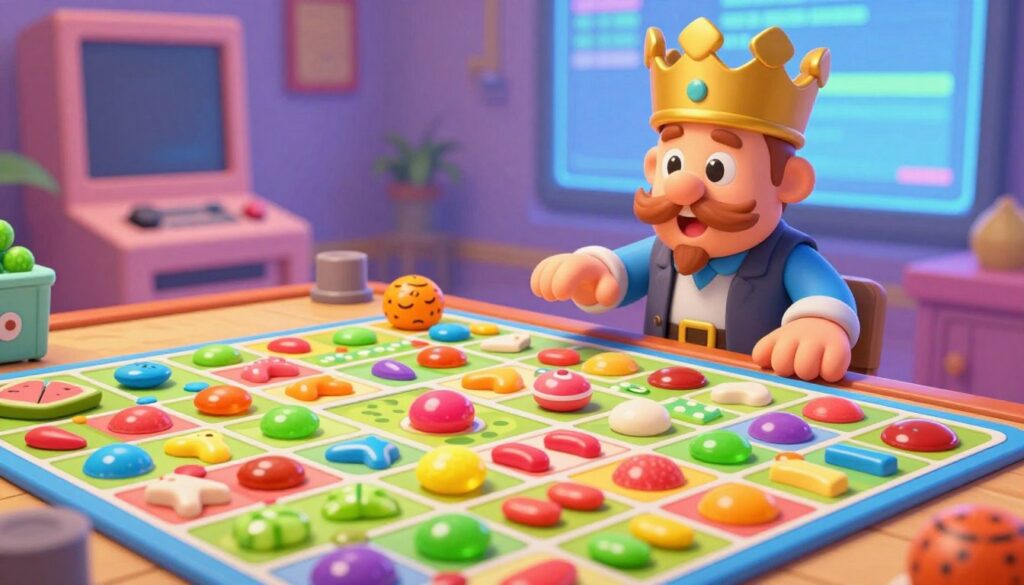
The magic behind Candy Crush begins with its intuitive and extremely addictive gameplay mechanics.
By transforming simple actions into visual and auditory rewards, the title has created an entertainment pattern that appeals to different types of people around the globe.
This solid structure is what guarantees constant engagement, keeping users interested even after hundreds of rounds.
The apparent simplicity hides an intelligent design, focused on offering a fluid and rewarding user experience.
The concept of matching three elements
The heart of the game lies in the task of aligning three or more identical candies to eliminate them from the board. This “match-three” format is the backbone that sustains all player progression.
To make this task more dynamic, the game introduces special combinations that generate chain reactions.
Here are some of the most common results when making strategic moves:
- Combination of four candies: Creates a striped candy that clears an entire row or column.
- L or T-shaped combination: Generates a wrapped candy that explodes in a specific area.
- Combination of five candies: Forms a special candy that removes all pieces of one color.
The Learning Curve and Instant Satisfaction
One of Candy Crush’s greatest strengths is its smooth learning curve. In the early levels, the player is guided by quick tutorials that teach the basic rules without causing any frustration.
This initial ease generates a feeling of immediate satisfaction, essential for retaining new users. Upon completing a level, the system celebrates victory with vibrant animations, reinforcing the desire to continue advancing to the next challenge.
The Role of Boosters and Obstacles
As the player progresses, the game mechanics become more complex with the introduction of new elements. Obstacles such as multiplying chocolates or jellies that need to be removed require more careful planning.
To balance this increasing difficulty, the game offers powerful boosters that help overcome difficult levels, enhancing the user experience, transforming moments of tension into opportunities for victory, and maintaining high engagement throughout the journey.
The Transition to Mobile and Viral Success
The transition to mobile solidified the title as a landmark in the digital entertainment industry. King quickly realized that the future of casual games was in the palm of users’ hands.
This strategic shift allowed the company to reach a much wider audience. The result was exponential growth that transformed the project into a true global phenomenon.
The Adaptation to Touchscreens
The game mechanics were refined to take full advantage of smartphone technology. The use of simple gestures, such as swiping to match pieces, made the experience fluid.
This adaptation eliminated barriers to entry for players of all ages. By simplifying interaction, King ensured that anyone could master the controls in seconds.
The Role of Social Networks in Dissemination
Integration with social platforms was a fundamental pillar for the title’s mobile success. Players could share achievements and ask friends for lives, creating a network of constant interaction.
This sharing mechanism generated unprecedented organic engagement, transforming it from a solitary activity into a shared social experience among acquaintances.
How the game became a daily habit
The game’s design was conceived to offer small doses of satisfaction throughout the day, rewarding rapid progress, which encourages constant return to the app.
The psychology behind the short breaks transformed the title into a daily habit for millions of people, keeping the game relevant as a global phenomenon to this day.
The evolution of design and the psychology of colors
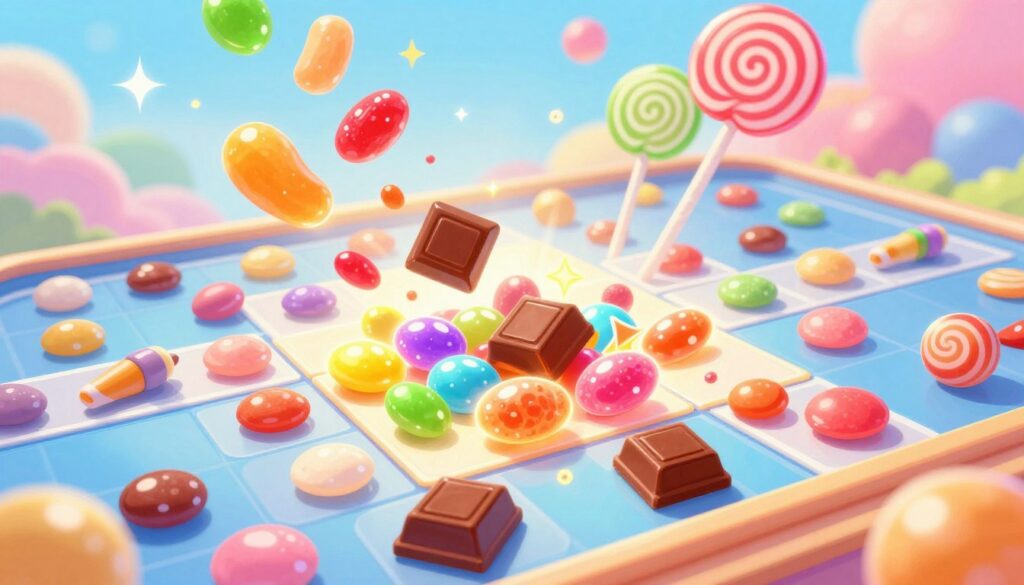
The visual identity of a game is what first captures the player’s attention. In the world of casual games, aesthetics are not just for decoration, but function as a strategic retention tool.
Visual Aesthetics as a Pillar of Retention
Game design needs to be intuitive so that the user feels comfortable from the first level. When visual elements are clear and organized, the player quickly understands the objective of the game.
This visual clarity reduces frustration and increases the time spent in the application. A well-structured graphic environment creates a cycle of visual reward that encourages daily return.
How Colors Influence the Player Experience
The choice of colors is a determining factor for the success of any digital interface. Through color psychology, developers can guide the user’s eye to the most important buttons and elements.
Vibrant and contrasting colors help create a more dynamic and stimulating user experience, making each interaction more enjoyable and less tiring for the eyes.
Graphical Updates Over the Years
The constant evolution of graphics has allowed the game to remain relevant in a highly competitive market. What began with simple shapes has gained richer textures and fluid animations over time.
These improvements in game design ensure that the user experience remains modern on devices with high-resolution screens. Therefore, keeping up with visual trends is undoubtedly one of the secrets to the brand’s longevity.
The evolution of the artistic style reflects the maturation of the industry itself. By intelligently applying color psychology, the game remains a benchmark for accessible and captivating design.
Conclusion
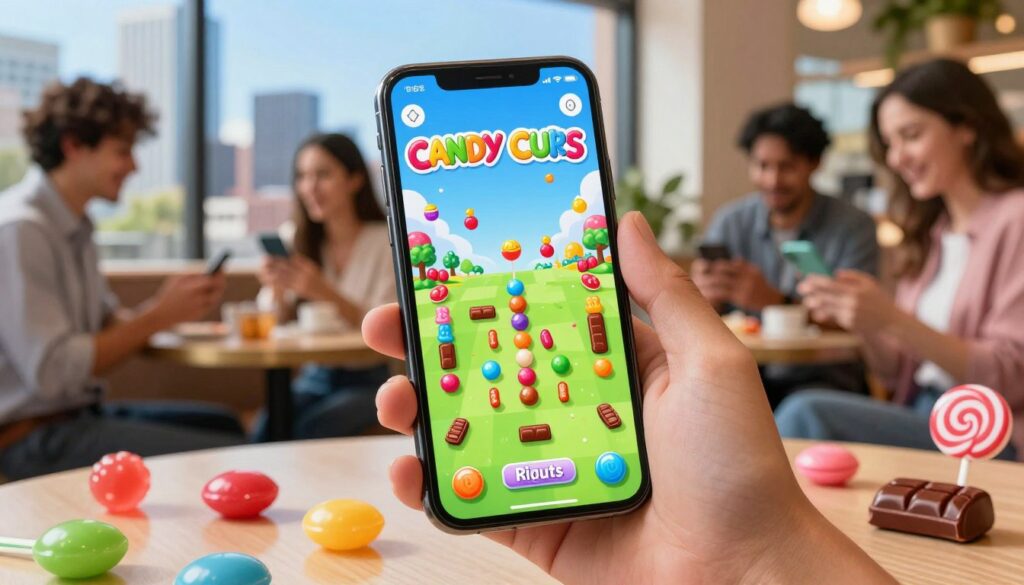
Candy Crush transformed the industry by establishing itself as a true global phenomenon; its simplicity has sustained a loyal fanbase for over a decade.
The trajectory of this casual game shows how constant adaptation keeps interest alive. The monetization model balances free access with options that value the player’s time.
The brand’s expansion through various spin-offs has allowed the candy universe to reach new audiences. Each new version brings challenges that renew the experience for those seeking quick fun.