Anúncios
Have you ever wondered why some players always seem to be one step ahead during matches? The answer might lie in how you interact with the digital environment.
Success in Call of Duty depends heavily on how well you master the surrounding landscape. Knowing every nook and cranny allows you to anticipate enemy movements and control the pace of the engagement with far greater precision.
Today, we’ll explore how map knowledge transforms your Call of Duty experience and leads to more frequent victories.
Anúncios
The best classic maps that defined the franchise

Call of Duty®: Mobile
You will be redirected to another website
Call of Duty®: Mobile
Over the years, the Call of Duty franchise has delivered maps that have become fundamental pillars, shaping how we approach virtual combat. These environments are not merely battlegrounds but true lessons in design that continue to influence new releases.
Understanding what makes these locations so special helps any player appreciate the importance of balance and fluidity.
Anúncios
When analyzing the best maps, we notice that every detail was crafted to create a memorable experience, whether through frenetic firefights or precise tactical plays.
Nuketown: organized chaos in a compact space
Nuketown is undoubtedly one of the most recognizable maps in the entire series. Its small size forces an extremely fast-paced game, where reaction time is the only factor separating victory from defeat.
The compact design turns every match into a spectacle of non-stop action—the perfect environment for those looking to test their reflexes and master area control under constant pressure.
Crash: a masterclass in urban combat
Unlike the frenetic intensity of other locations, Crash offers an experience focused on verticality and controlling strategic points; it is a classic example of how urban combat should be structured in a competitive FPS.
Players must balance aggression with patience, utilizing windows and rooftops to gain an advantage over opponents.
Mastering this map requires a deep understanding of sightlines and the paths connecting key areas.
Firing Range: versatility for every playstyle
Firing Range stands out for its ability to accommodate various playstyles. Whether you prefer sniper rifles or close-quarters weapons, the map offers spaces that favor diverse combat styles.
The layout of obstacles and the distribution of control points ensure that no two matches are alike. It is this versatility that keeps the map a fan favorite, proving that good design is timeless and always relevant to the community.
Fast-paced maps for those seeking constant action
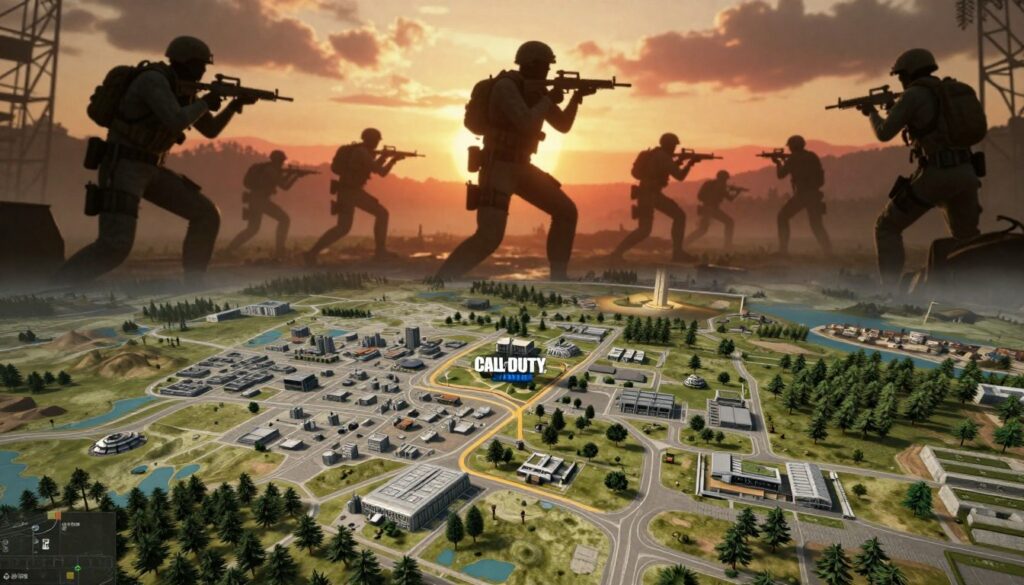
The true essence of frenetic action lies in compact, intense maps. In these settings, reaction time is the factor that separates veterans from beginners, demanding total focus at every millisecond.
Gameplay in these environments requires an agile mindset and quick decision-making. There is no room for hesitation when the enemy can appear from any angle just a few meters away.
Shipment: the ultimate test of reflexes
Shipment is widely recognized as the franchise’s most chaotic battlefield. The tight space forces constant direct confrontations, where your ideal loadout should prioritize aim speed and fire rate.
Staying calm under pressure is essential here. Those who master reload timing and strafing can stand out even amidst absolute chaos.
Rust: verticality and intense clashes
Rust raises the stakes by introducing vertical elements into an extremely confined environment. The central tower is a strategic point, but also an easy target for those who know how to position themselves.
To survive, tune your ideal loadout for mobility and close-range reach. Controlling the terrain is vital to avoid being flanked by opponents circling the base.
Shoot House: the perfect balance for close-quarters combat
Shoot House offers a layout that appeals to both aggressive players and those who prefer a more tactical style. The arrangement of corridors allows for frenetic action without sacrificing the organization needed for team success.
Gameplay flows naturally, encouraging the use of grenades and the control of choke points—an ideal scenario for testing new strategies and honing your accuracy in fast-paced firefights.
Strategies for mastering the best long-range maps
When the battlefield expands, precision and patience become your greatest assets. Mastering large-scale maps requires adjusting your combat tactics to avoid unnecessary exposure.
By adopting a more methodical approach, you turn the environment to your advantage and increase your chances of success. Wasteland: patience as your primary weapon
In this setting, haste is your greatest enemy. The vast terrain favors players who know how to wait for the right moment to take a precise shot. Therefore, staying calm and observing enemy movements from a distance is the key to mastering this environment.
Afghan: mastering open lines of sight
Afghan is one of the best maps for those who prefer sniper rifles. Controlling the central lines of sight allows you to efficiently dictate the pace of the match.
A solid strategy here involves occupying high ground and monitoring enemy routes.
Derail: the importance of tactical positioning
Tactical positioning on Derail determines who survives the intense firefights. Make use of the map’s structures for cover while seeking out advantageous firing angles.
Combining these combat tactics with smart movement gives you a genuine competitive edge in any match.
The evolution of map design across generations
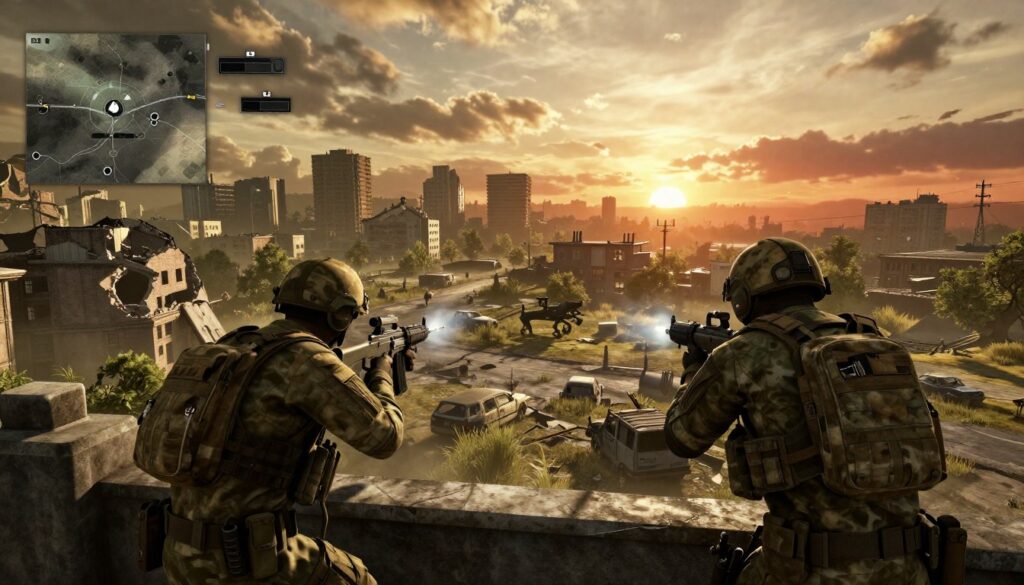
The evolution of gaming has brought incredible complexity to digital battlefields.
In the past, environments were limited by technical constraints, focusing on direct and predictable paths. Today, map design prioritizes freedom and tactical depth.
From linear design to modern complexity
In the franchise’s early years, maps followed almost linear structures.
The goal was to guide the player through narrow corridors, where combat was inevitable and constant. This approach made learning easier but limited the players’ strategic options.
Over time, developers began creating more organic and open environments.
The transition to modern structures allowed players to choose different routes, using the environment to their advantage. Today, a good map offers multiple layers of interaction, such as:
- Hidden flanking routes.
- Vertical vantage points.
- Destructible cover areas.
- Transition zones between indoor and outdoor environments.
How graphics technology has changed interaction with the environment
Technological advancements have brought more than just better visuals; they have also changed how we interact with the game environment.
The evolution of gaming has allowed environmental elements to become active parts of strategy. Textures and objects now possess physical properties that directly influence combat.
Dynamic lighting and realistic shadows have altered the way we take cover or advance. Experienced players use these visual details to spot enemies or anticipate movements, turning map design into an essential tool for immersion and match success.
How map choice influences your performance
Have you ever wondered why some matches seem much easier than others? The truth is that the environment where you fight dictates the pace of combat and directly affects your online performance.
Each setting requires a different approach if you want to stand out against your opponents.
Understanding the characteristics of each location is the first step toward leveling up. When you grasp the flow of movement and lines of sight, your chances of victory increase significantly.
Adapting your loadout to the environment
There is no single perfect weapon for every situation. The key to success lies in creating an ideal loadout that perfectly suits the needs of the chosen map. In areas with narrow corridors, short-range, high-fire-rate weapons are your best allies.
In open environments, however, focusing on sniper rifles or weapons with high stability is crucial.
Don’t be afraid to experiment with different attachment configurations to see what works best on each terrain, allowing you to respond quickly to any challenge you encounter.
Player psychology: familiar versus new maps
Familiarity with the terrain instills a natural confidence that improves your reaction time.
When playing on maps we know well, our brains process information automatically, allowing us to focus entirely on aiming and positioning.
On the other hand, facing unfamiliar scenarios can lead to momentary hesitation. To maintain a high level of performance, try to observe your opponents’ movement patterns during the first few minutes.
Staying calm and curious while exploring new locations is what sets ordinary players apart from true strategists.
Conclusion
A journey through Call of Duty’s most iconic settings reveals that deep knowledge of the terrain distinguishes average players from true strategists.
Applying these Call of Duty tips allows you to anticipate opponents’ moves with precision. Consistent practice and the ability to adapt quickly to different environments are the fundamental pillars for anyone looking to level up.
Each map offers a unique opportunity to hone your tactical skills. Therefore, use the knowledge you have gained to adjust your loadouts and improve your positioning in real time.