Anúncios
We often seek entertainment solely for the sake of action, yet some works emerge to transform our perception of what interactivity can be.
This artistic adventure invites players to explore a world where colors and sounds tell a profound story. Free from complex dialogue, the narrative unfolds through delicate visuals and a soundtrack that embraces every moment of discovery.
Today, we explore the game Gris and discover how it has won over fans.
Anúncios
The story of Gris: a journey between loss and hope.
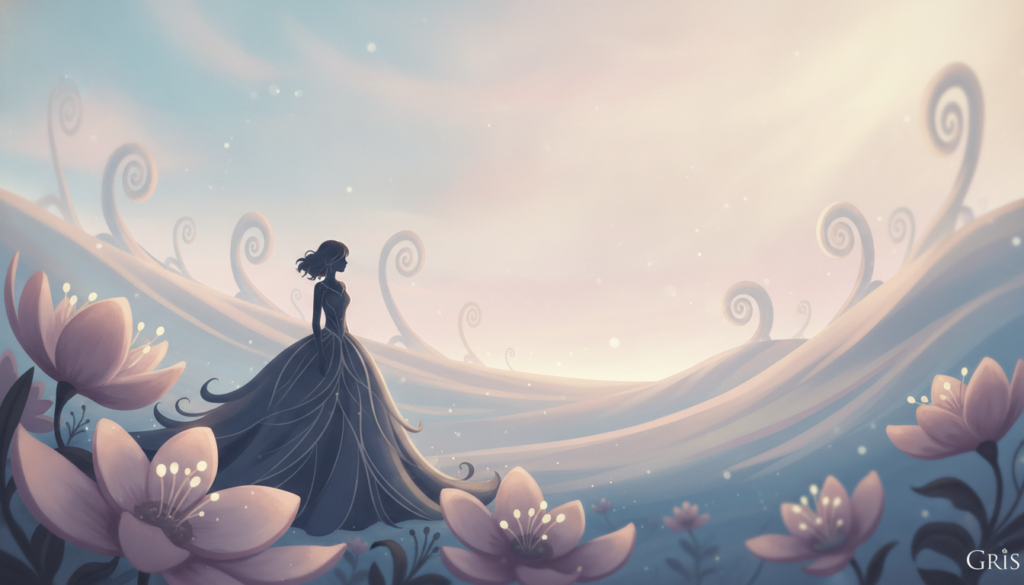
The game builds a delicate bridge between loss and hope, allowing the player to experience a process of personal transformation through environments that evolve alongside the protagonist’s state of mind.
Grief represented as a silent journey
The absence of dialogue is a fundamental artistic choice that makes the experience universal. Without words, the visual narrative conveys complex emotions that would be difficult to describe through text or direct explanation alone.
This silence allows each player to project their own life experiences onto the screen, turning the journey into a mirror of human emotion and focusing on the essence of what it means to feel and overcome a difficult time.
Anúncios
The significance of the protagonist’s emotional reconstruction
The protagonist moves through various phases during her journey, each symbolizing a different stage of her recovery. The game uses colors and environmental elements to mark this progress, shifting from a washed-out world to a vibrant universe.
We can identify several key milestones in this reconstruction:
- Acknowledging one’s own vulnerability in the face of pain.
- The search for small signs of life in a desolate environment.
- Accepting change as a natural part of growth.
- Rediscovering the inner strength needed to move forward.
How the narrative leaves room for different interpretations
The story of Gris does not impose a single truth regarding what the character is facing. As an open visual narrative, it invites the audience to interpret the symbols based on their own life experiences.
This interpretive freedom is what makes the title so special and memorable. By balancing loss and hope, the game offers a sanctuary where each person can find their own meaning in overcoming adversity.
Gris: a work of art in motion
Few titles manage to capture the essence of traditional painting quite like this artistic adventure. Every visual detail is designed to convey deep emotions without the need for a single word.
The influence of watercolor and traditional illustration
The game employs a visual style that directly evokes watercolor art, creating soft, fluid textures that give the title a unique identity, making every setting look like a hand-painted canvas.
Traditional illustrations come to life through fluid, detailed animations. The result is a visual experience that stands out for its delicacy and the aesthetic care evident in every movement of the protagonist.
Environments that shift with the character’s emotional state
The game’s environments are not merely backdrops but extensions of the protagonist’s psyche. As she evolves, the world around her transforms, reflecting her pain and her journey toward healing.
Geometric shapes and architectural structures shift to mirror the progress of the journey. This connection between the setting and the character’s inner state creates a powerful, immersive visual narrative.
The expressive use of color throughout the adventure
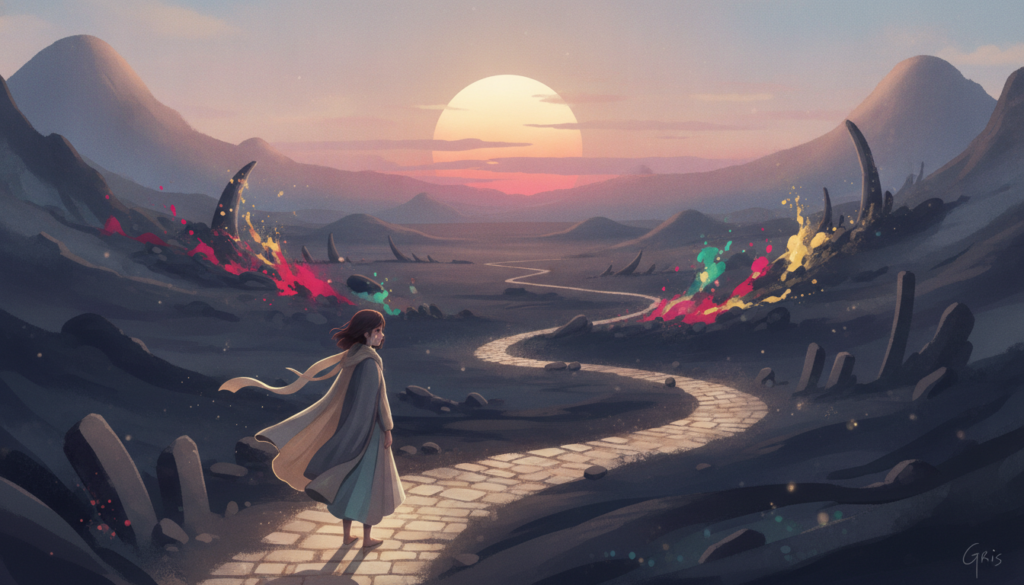
The color palette evolves strategically, beginning with monochromatic tones that represent emptiness. As the character regains her voice, new colors emerge to fill the world with life and hope.
This shift in color guides the player through a true artistic adventure. The clever use of color turns exploration into a healing process, where every newly discovered hue celebrates an emotional victory.
How gameplay mirrors the protagonist’s development
The gameplay in Gris evolves organically, reflecting the protagonist’s inner growth. As she overcomes her traumas, the player gains new tools to interact with the surrounding environment.
This progression is not merely technical; it serves as a visual metaphor for emotional maturation. Each introduced mechanic helps the character surmount obstacles that once seemed insurmountable.
Abilities acquired at key narrative moments
As the story unfolds, the protagonist unlocks unique abilities that alter the perception of the world, enabling her to navigate complex environments with greater fluidity and confidence.
Among the key mechanics the player discovers, we can highlight:
- The ability to transform her dress into a heavy block to withstand strong winds.
- The double jump, which facilitates navigation in vertical areas.
- The ability to slide across surfaces, gaining speed and momentum.
- The transformation into liquid form to interact with aquatic elements.
Exploration, platforming, and challenges without undue pressure
The game’s design prioritizes exploration, allowing the player to soak in the beauty of the environments without the constant fear of failure.
Platforming sections are seamlessly integrated into the environment, focusing more on fluid movement than on punishing difficulty.
There are no direct-attacking enemies or anxiety-inducing timers. The primary goal is to let the player connect with the protagonist’s journey at their own pace.
Balancing discovery and progression
Great care is taken to ensure Gris‘s gameplay never becomes repetitive. The game introduces new exploration elements just as the player has settled into the current mechanics.
This balance ensures that the platforming challenges are rewarding rather than frustrating. Consequently, the experience remains centered on the emotional narrative, keeping the player engaged from the adventure’s start to its finish.
The adventure’s most memorable settings
Exploring the landscapes of Gris is like walking through a living, breathing art gallery. Each environment has been carefully crafted to evoke specific sensations, guiding the player through a profound emotional journey.
Its aesthetic beauty is not merely decorative but an essential element of the narrative.
The desert and the sense of emptiness
At the start of the journey, the landscapes of Gris feature vast, arid expanses that evoke a deep sense of isolation. The desert serves as a visual metaphor for the emptiness left by loss.
It is a space where the protagonist must learn to take her first steps in a world that seems to have lost all its color.
The forests and the rediscovery of life
As the story progresses, the color palette expands, and nature begins to bloom. The forests represent the return of hope and the capacity for renewal following a period of grief.
This environment invites the player to observe the growth and vitality that emerge as one overcomes adversity.
The submerged depths and overcoming fear
The game also delves into submerged areas, where the atmosphere becomes heavier and more challenging, symbolizing the protagonist’s confrontation with her deepest, most hidden fears.
Navigating these waters requires patience and courage, reflecting the internal process of acceptance and healing.
Monumental architecture as part of the narrative
Finally, the monumental architecture found throughout the landscapes of Gris reinforces the scale of the journey. Gigantic structures and ancient ruins serve as landmarks that mark the character’s progress.
These architectural elements not only enhance the game’s beauty but also tell the story of a world that—much like the protagonist—seeks to rebuild itself.
A soundtrack that gives voice to emotions
As we explore the environments, we realize that the Gris soundtrack is almost a character in its own right. It does more than just fill the silence; it dictates the rhythm of discovery and the protagonist’s internal transformations. How the music drives each stage of the journey
The musical composition evolves as the character regains her strength and color. At the start, the melodies are restrained and melancholic, reflecting her state of shock and initial loss.
As new paths open up, the Gris soundtrack gains layers, instruments, and intensity. This sonic progression ensures the player tangibly feels the weight of every small victory achieved during exploration.
Silence, ambient sounds, and moments of contemplation
The strategic use of silence is crucial for immersion. At many points, the game allows only ambient sounds—such as the wind or the movement of water—to guide the experience.
These moments of calm are essential for the player to process the emotions they have experienced. The absence of music at specific times creates a powerful contrast, making the return of the melody even more impactful.
- Footstep sounds that change according to the surface.
- Natural sounds that reinforce the vastness of the environments.
- Soft melodies that emerge during moments of discovery.
- Absolute silence that emphasizes the protagonist’s solitude.
The partnership between imagery and musical composition
There is a profound connection between what we see on screen and what we hear. The Gris soundtrack was designed to respect the visual aesthetic, creating an artistic unity where image and sound become inseparable.
This harmony ensures a fluid and moving experience. The result is a complete sensory journey, where every musical note seems to have been painted alongside the game’s vibrant landscapes.
Conclusion
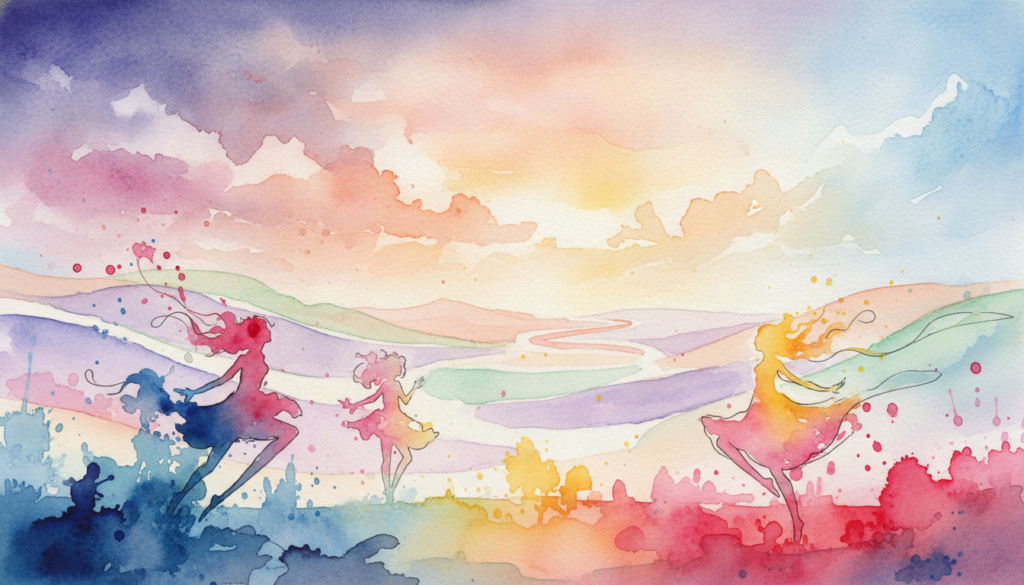
Exploring Gris means immersing oneself in a universe where art and digital interaction blend seamlessly. Nomada Studio’s title proves that games can be powerful vehicles for conveying complex emotions without the need for a single word.
The story of Gris offers a sanctuary for those seeking reflection and aesthetic beauty. Each player finds personal meaning while traversing the hand-painted landscapes, turning the experience into something unique and deeply intimate.
The balance between the immersive soundtrack and intuitive gameplay ensures the focus remains on the protagonist’s journey. Gris stands out by respecting the player’s pace, allowing contemplation to guide every step taken in the game.