Anúncios
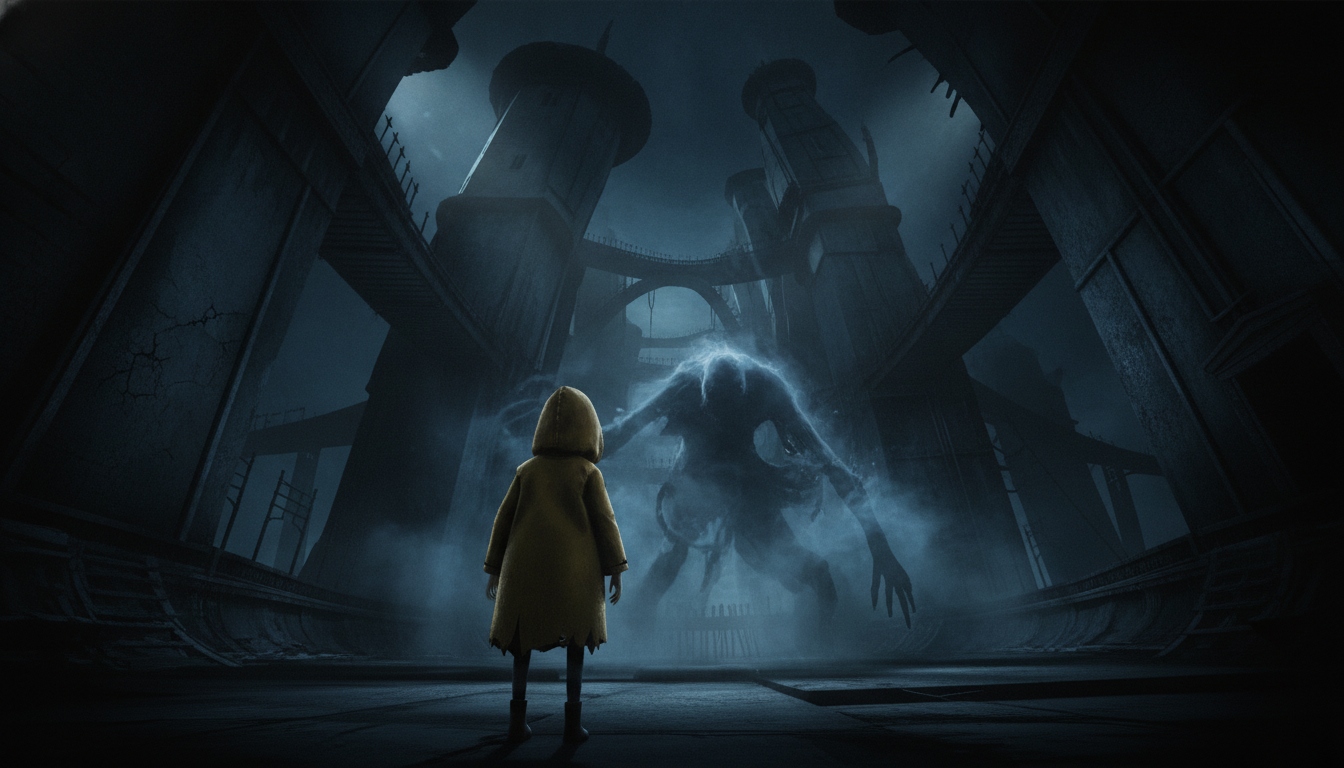
Have you ever felt vulnerable in a world that seems designed solely to terrify you? That is the feeling that defines the journey of a small child lost in a vast and menacing environment.
As you explore the shadowy corridors of Little Nightmares, you quickly realize that survival depends more on cunning than on brute force.
Today, we’ll dive into the unique atmosphere and striking visual identity that make this game so memorable.
Anúncios
Little Nightmares: story, setting, and atmosphere
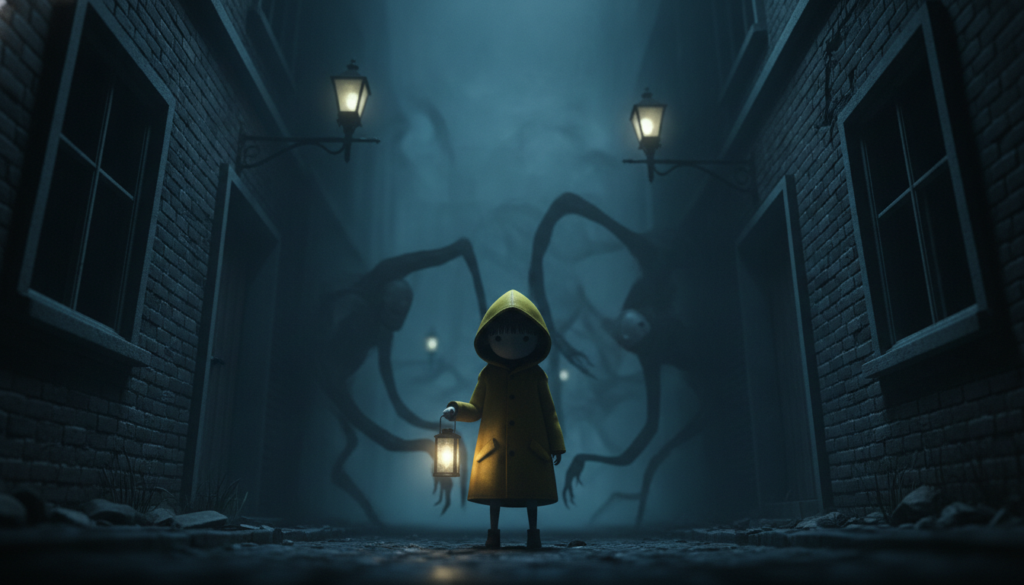
The story of Little Nightmares comes to life through a setting that breathes fear. The game eschews traditional dialogue, preferring to let the environment convey everything we need to know about this unsettling world.
Six’s journey aboard The Maw
The protagonist, Six, finds herself trapped in a vast, ravenous place known as The Maw—a location that functions like a living organism, where every compartment conceals horrors that defy logic and threaten a child’s safety.
Six’s journey is defined by a constant need to escape. As she traverses filthy kitchens and forgotten deck areas, the player feels the weight of isolation and the urgent need to survive in a hostile environment.
Anúncios
The significance of the decaying, claustrophobic environments
The settings are designed to make the player feel small and vulnerable. The decaying architecture—featuring rusted pipes and disproportionately large furniture—reinforces the sense that this place was not built for humans.
Claustrophobia is central to the experience. Cramped spaces and poor lighting create constant tension, forcing the player to scrutinize every corner before moving into the next room.
Visual storytelling and details that invite interpretation
Visual storytelling lies at the heart of the experience, allowing each player to form their own theories about what transpired there. The game trusts the audience’s intelligence to connect the dots scattered throughout the environment.
Silence, sound, and movement used to tell the story
Sound design plays a crucial role in immersion. Silence is punctuated by metallic clanking, distant footsteps, or the guttural sounds of the ravenous creatures inhabiting the place.
- The creaking of doors signaling imminent danger.
- Six’s heavy breathing during moments of stress.
- The muffled sound of gears turning in the bowels of the ship.
- Heavy footsteps indicating the presence of a pursuer.
Symbolic elements scattered throughout the environments
Various symbols scattered throughout the game help build the atmosphere. Everyday objects, when viewed from a distorted perspective, take on new meanings and reinforce the work’s nightmarish tone.
Every detail—from an abandoned doll to a table set for a macabre banquet—serves as a piece of the puzzle, encouraging thorough exploration and rewarding those who take the time to observe the world around them.
How Little Nightmares’ gameplay works
The heart of Little Nightmares lies in its movement mechanics and constant interaction with the environment.
The gameplay is designed so that every step feels like a significant decision, requiring the player to observe every detail in their surroundings.
Exploring interconnected environments
The journey takes place on a vast, mysterious vessel where each room connects organically. You won’t find complex maps; instead, paths reveal themselves as you explore the depths of the location.
This structure fosters curiosity, allowing you to discover shortcuts and secrets hidden in the shadows. Exploration is rewarding, as each new area offers clues about the world around you.
Platforming, movement, and object interaction
Six’s movement is fluid but demands precision when jumping between platforms or climbing gigantic furniture. You will need to interact with various objects—such as keys, levers, and items—to clear a path or solve minor puzzles.
The weight and scale of objects reinforce the protagonist’s sense of fragility. Manipulating these items is essential for progress, effectively turning the environment into a tool for survival.
Stealth as your primary survival tool
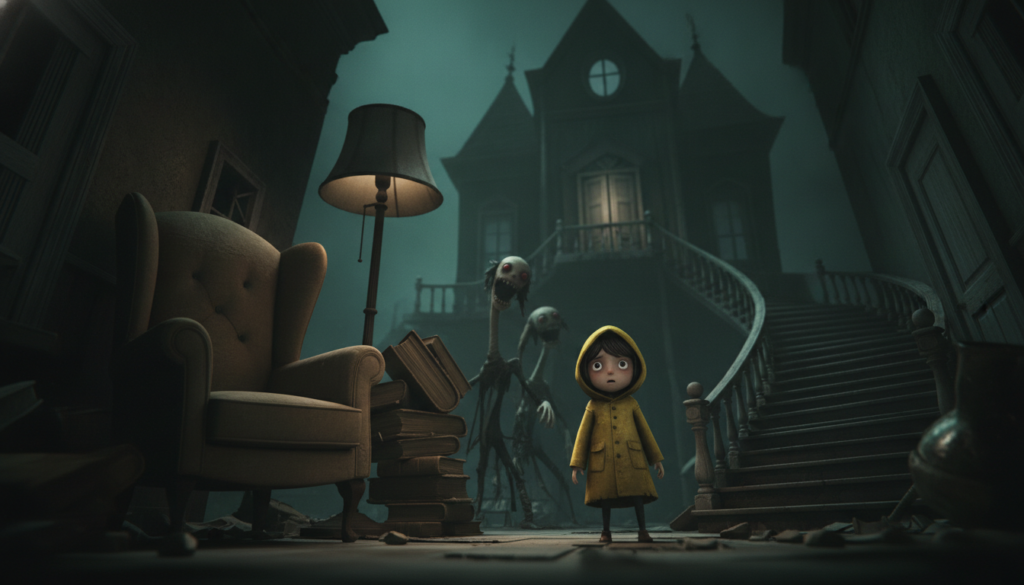
Stealth is your greatest ally against the threats inhabiting the vessel. Rather than direct combat, the game focuses on avoiding confrontation by staying out of your enemies’ line of sight.
When to run, hide, or observe your surroundings
Knowing the right moment to act is vital to avoid capture. Observing enemy movement patterns allows you to choose the ideal moment to run or to hide under tables and inside crates.
Sometimes, the best strategy is simply to stop and observe. Silence and patience are often more effective than haste in high-risk situations.
How to use lighting and landmarks
Lighting plays a crucial role in gameplay, highlighting safe paths or revealing hidden dangers. Use light and shadow to your advantage, camouflaging yourself as you move through guarded areas.
Visual landmarks—such as specific pieces of furniture or architectural features—help guide your navigation. Paying attention to these details ensures you don’t get lost while using stealth to escape.
Enemies and the adventure’s most tense moments
The horror in Little Nightmares comes to life through the grotesque, relentless creatures inhabiting the vessel. Each encounter is designed to make the player feel Six’s fragility in the face of a cruel, oversized world.
The threats that stalk Six throughout the game
The enemies in Little Nightmares are not merely obstacles but embodiments of visceral horror; they possess keen senses and occupy spaces that, at first glance, appear safe to explore.
The constant presence of these figures turns corridors and kitchens into zones of absolute danger. You never know exactly when a single misstep will draw unwanted attention.
The role of antagonists in building fear
The antagonists serve as engines of psychological tension, stalking the protagonist while dictating the game’s pace through their slow, deliberate movements.
This slowness creates agonizing anticipation. Fear is built not through direct confrontation, but through the constant need to hide and avoid eye contact with these distorted figures.
Chases demanding alertness and quick reactions
Chases provide the game’s adrenaline-fueled highlights. In these moments, players must combine a quick assessment of the environment with precise reflexes to find an escape route.
Success hinges on grasping the layout of the setting in mere seconds. Any hesitation could spell the end of Six’s journey.
Identifying enemy behavior patterns
Observation is the key to survival. Most opponents follow specific patrol routines that can be studied before attempting to move forward.
- Analyze the creatures’ field of view.
- Listen for the sounds they make to anticipate their approach.
- Identify pauses in their movement.
- Use the environment to create auditory distractions.
Common mistakes during escapes and in danger zones
Many players fail when trying to run without a clear destination. Panic is the greatest enemy, as it leads to impulsive decisions that result in dead ends.
Another frequent mistake is overlooking environmental details that offer hiding spots. Learning to use shadows and objects in the surroundings is essential for overcoming the most challenging areas.
Challenges, puzzles, and exploration without easy answers
Unraveling the mysteries of Little Nightmares is a constant exercise in curiosity and attentiveness. The game offers no maps or clear indicators, forcing you to read the environment to figure out how to move forward.
These environmental puzzles are the heart of the experience, requiring players to closely observe the details around them.
Puzzles based on observation and experimentation
Often, the solution to an obstacle is hidden in an object that seems ordinary at first glance. You will need to interact with levers, pull open drawers, or find keys hidden in unusual places.
The logic here is purely visual, rewarding those who take the time to analyze enemy behavior and the layout of the rooms.
How the game encourages players to test possibilities
The level design is clever in allowing you to test different approaches to overcome a challenge. If a path seems blocked, there might be an alternative route or an object that can be moved to create a new passage.
This freedom to experiment makes solving puzzles much more satisfying, as the achievement is the result of your own dedication.
Collectibles, secrets, and optional details
Beyond the main path, the game hides various collectibles that enrich the narrative. Finding these mysterious figures or interacting with specific environmental elements helps you better understand the decaying world of The Maw. These secrets aren’t mandatory, but they add an extra layer of depth for those who enjoy investigating every nook and cranny.
The difference between progressing through the story and exploring everything
There is a clear distinction between simply finishing the campaign and aiming for 100% completion. Advancing the story focuses on immediate survival and escaping the threats that inhabit the area.
On the other hand, exploring every detail and hunting down all collectibles requires patience and the courage to venture into dangerous areas that lie off the beaten path.
Conclusion
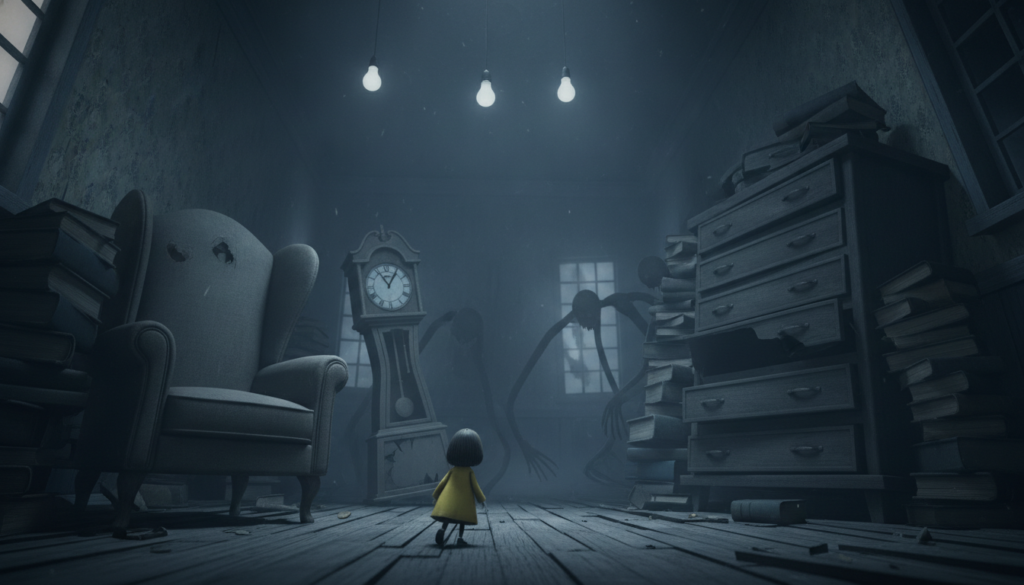
Little Nightmares delivers a rare experience that balances constant tension with unsettling visual beauty. Six’s journey through The Maw leaves a lasting impression on anyone seeking profound, authentic psychological horror.
This review of Little Nightmares highlights how sound design and art direction create a world where every detail tells a silent story, proving that dialogue is not required to convey intense feelings of fear and vulnerability.
Upon reaching the end of Little Nightmares, the player realizes that the campaign’s brevity is a strength. The intensity of the adventure ensures that every moment is memorable, leaving no room for unnecessary repetition or distractions.