Anúncios
Have you ever wondered what would happen if a game decided to place its full trust in your intelligence, without offering a single tutorial or explanation? That is the central premise of a title that redefines digital exploration.
The Witness invites you to observe your surroundings closely, transforming the landscape itself into a complex series of logic puzzles.
Here, we will learn the visual language of the environment to solve the puzzles scattered throughout.
Anúncios
Exploring the island: a world without words
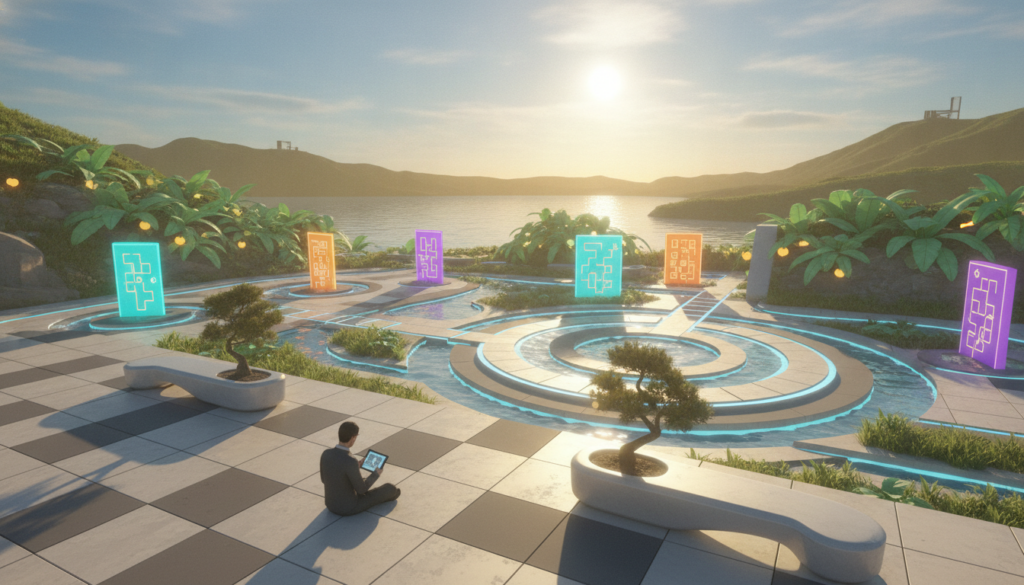
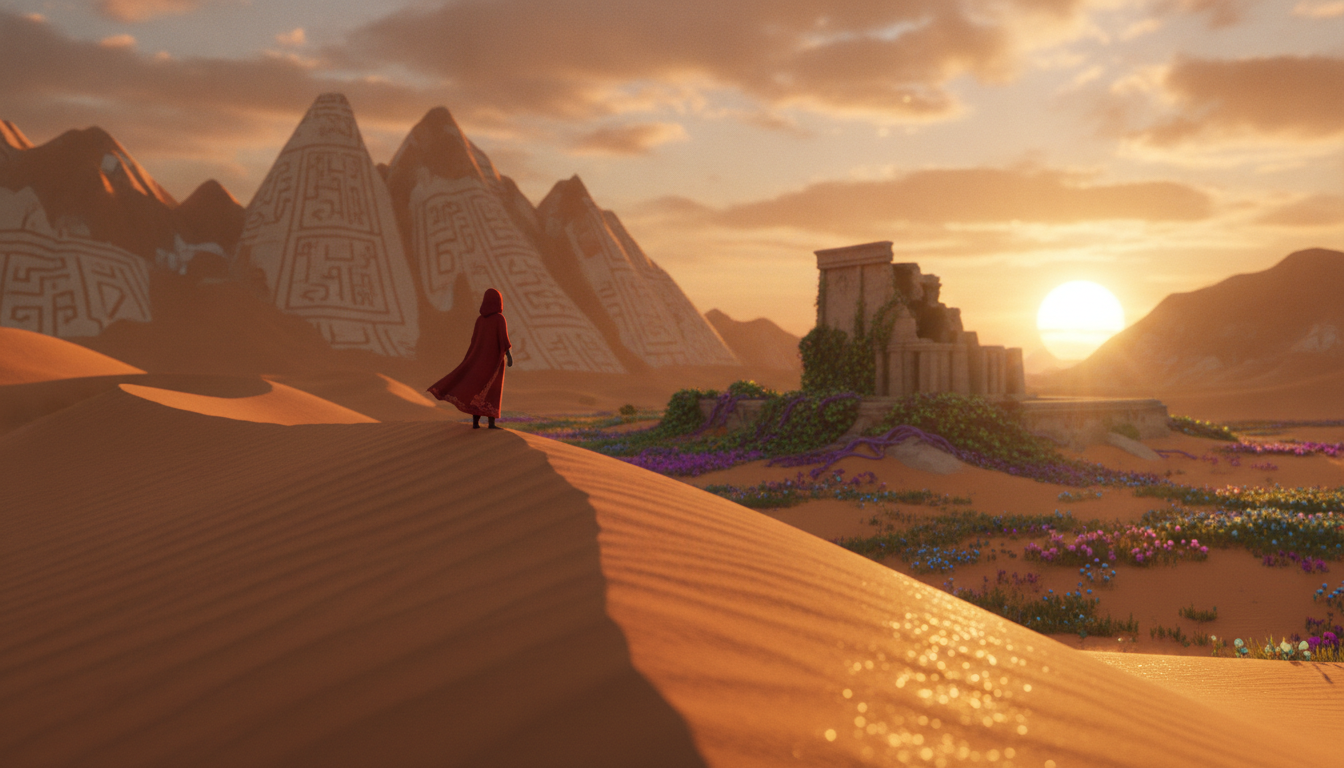
Imagine a place where every stone and tree tells a story without uttering a single word. Upon arriving in this setting, you quickly realize that the island acts as a silent character, waiting for you to decipher its secrets through keen observation.
There are no manuals or dialogues to explain what happened there. Instead, the environment becomes your primary teacher, guiding your steps along paths that seem natural yet conceal complex challenges.
Environmental storytelling as a guide
Environmental storytelling forms the backbone of your entire journey. Every architectural structure and detail in the vegetation has been strategically placed to convey information about the location’s past.
Anúncios
As you observe how the elements connect, you begin to grasp the logic behind the design. This method of storytelling requires the player to pause, look around, and connect the dots independently, making the experience deeply personal.
Freedom of movement and curiosity
Freedom of movement is essential for feeling in complete control of your exploration. You are not forced to follow a specific trail, allowing curiosity to serve as your true driving force.
When you choose to investigate a forgotten corner of the island on your own initiative, every discovery takes on special significance, turning exploration into an intellectual achievement—where the ultimate reward is the satisfaction of understanding the world around you without external aid.
The core mechanic: how The Witness challenges your perception
The journey across this mysterious island is driven by a constantly evolving puzzle mechanic. The game offers no ready-made answers, compelling the player to learn the rules through direct experimentation.
This approach turns every interaction into a valuable lesson. You will soon realize that the logic applied at the start serves merely as a foundation for far deeper challenges.
The panel system and its variations
At the heart of the experience lie the panels scattered throughout the island. Initially, they present simple puzzles that teach the basics of tracing paths and connecting dots.
Over time, these variations become more complex. You will encounter symbols, colors, and restrictions that require careful analysis before any move.

The importance of observing the surrounding environment
Many players make the mistake of focusing solely on the panel screen. However, the game’s true puzzle mechanics often lie in the outside world.
The environment around you is not merely decorative; it holds essential clues that dictate how to solve the riddles you encounter along the way.
How the scenery becomes part of the puzzle
At various times, the solution to a challenge is hidden within the landscape itself. A cast shadow, the shape of a tree, or a reflection in the water might hold the key to moving forward.
The scenery blends organically with the puzzles. When you begin to view the world as an extension of the game, the experience becomes far more rewarding and immersive.
The learning curve and organic progression
Progression in The Witness unfolds so fluidly that you barely notice how much you have learned. The game avoids constant interruptions, allowing each player to find their own pace while exploring the island’s mysteries.
This approach turns every challenge into an opportunity for personal growth. Rather than forcing information on the player, the title trusts the intelligence of the person holding the controller.
Teaching through practice, not tutorials
Instead of manuals or explanatory text, the game relies on constant experimentation. Each new puzzle mechanic is introduced in a safe environment, where mistakes serve merely as stepping stones to understanding.
You begin with simple concepts that gradually grow more complex, ensuring knowledge is solidified through practice and making the experience much more rewarding.
The concept of “visual language” in the game
Communication within the game takes place entirely through symbols and geometric shapes, allowing anyone to grasp the rules—regardless of language—simply by observing the surrounding patterns.
To master this language, you must pay attention to the details the environment offers. Here are some elements that make up this learning system:
- Symbols indicating movement restrictions.
- Colors suggesting connections between different panels.
- Shapes dictating the correct order of resolution.
- Environmental clues revealing the hidden visual logic.
- Subtle changes in puzzle mechanics as the setting evolves.
By internalizing these cues, you move beyond merely solving problems to reading the world around you. This transition is what makes the journey so memorable and unique for every player.
The role of silence and soundscapes
The absence of a traditional soundtrack completely transforms how we interact with the environment.
Instead of melodies that guide emotions, the game relies on silence to create a unique, immersive experience. This choice allows the player to maintain total focus on the visual logic required to solve the puzzles.
The absence of a conventional soundtrack
Many games use epic music to set the pace, but here, silence is a strategic tool.
By removing the soundtrack, the developer compels the player to observe every detail of the landscape with heightened attention. This is essential for developing the visual logic that underpins all progress on the island.
Without auditory distractions, the mind can process complex patterns with much greater clarity. Silence is not emptiness; it is a space for deep reflection. This approach ensures that every discovery is the result of your own intellectual effort.
How the sounds of nature set the pace
Even without music, the island is far from silent. The sound of the wind blowing through the trees and the constant movement of the sea create a rich, organic atmosphere. These natural elements dictate the rhythm of your exploration, making the journey feel much more natural.
Ambient audio acts as a subtle guide, connecting you to the world around you. This immersive experience is reinforced by the way sounds shift as you move between different biomes.
The soundscape, therefore, becomes a vital component in maintaining engagement during long play sessions.
Conclusion
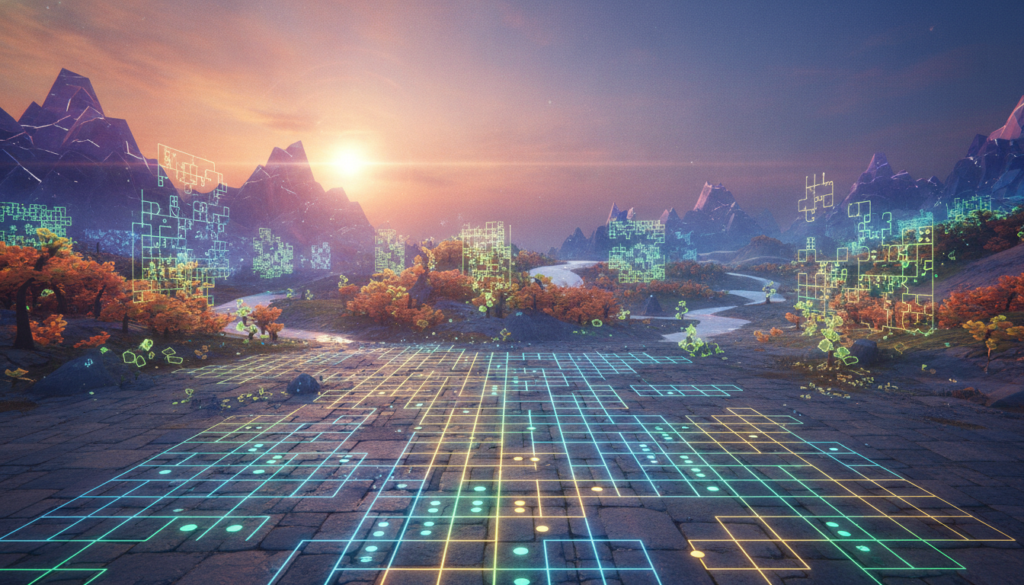
The Witness represents far more than just a collection of puzzles scattered across a paradise-like setting. This title invites you to slow down and observe the subtle details that make up life on the island.
Each challenge overcome reinforces the importance of patience and keen observation. The minimalist design created by Jonathan Blow transforms the act of playing into an immersive experience that demands total focus and an open mind.
You will discover valuable answers by allowing curiosity to guide your steps. The silence of the environment becomes a powerful ally during moments of deep reflection on the mechanics presented.