Anúncios
Limbo is a puzzle game that manages to capture the player’s attention right from the very first minutes. With a minimalist aesthetic, it builds a somber atmosphere that fully immerses us in a silent, mysterious journey.
The emotional connection we form with the environment is immediate. Without dialogue or explanations, we are invited to explore dangerous landscapes and uncover secrets hidden in every corner.
Today, we will dive into a universe where light and darkness dictate the rules of the game.
Anúncios
The minimalist aesthetic and visual impact

LIMBO
You will be redirected to another site.
LIMBO
Limbo’s minimalist design transforms every screen into a living work of art. By stripping away vibrant colors and unnecessary details, the game focuses on what truly matters to the player’s experience.
This aesthetic choice is not merely a matter of style, but a way to guide the eye. Visual clarity allows the audience to grasp dangers and paths without external distractions.
Anúncios
Masterful use of black and white
The monochromatic palette creates a somber atmosphere that defines the title’s identity. The contrast between deep black and grayish-white generates a sense of constant mystery.
This artistic technique eliminates the need for complex textures to convey depth. The result is a world that feels vast, dangerous, and—at the same time—eerily familiar.
Lighting and shadows as gameplay elements
In Limbo, Android and iOS, light does more than just illuminate the environment. It functions as a mechanical tool that dictates the pace of exploration and puzzle-solving.
Shadows conceal deadly threats and hidden paths that demand heightened attention. Players quickly learn that what cannot be seen is often the greatest danger in the environment.
Silhouettes as a means of emotional connection
The protagonist is represented solely by a simple silhouette, devoid of distinct facial features, allowing players to project their own emotions and fears onto the character.
Observing this solitary figure fosters an immediate protective bond. The lack of physical detail turns the little hero’s journey into a universal experience of overcoming adversity and vulnerability.
Gameplay mechanics: how Limbo challenges the mind
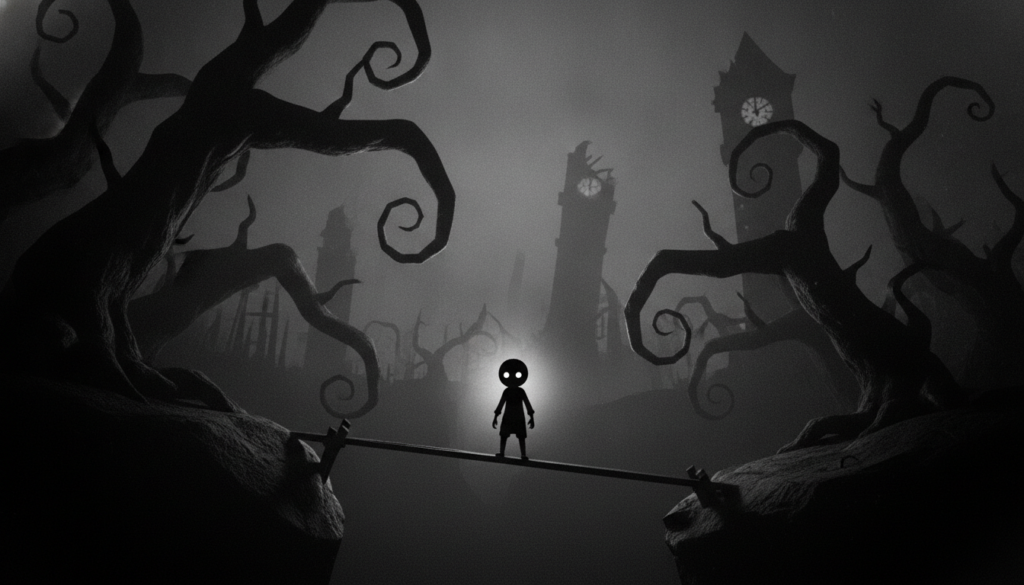
The brilliance of this puzzle game lies in how it uses physics to test the player. Rather than relying on lengthy tutorials, the experience invites you to observe and learn through constant practice.
Physics as the foundation for problem-solving
The game engine simulates natural laws in a practical way, allowing objects to react to weight and movement. You quickly realize that pushing a box or swinging a rope requires a basic understanding of inertia and gravity.
This approach turns every obstacle into a logic puzzle. Physics is not merely a visual detail but the primary tool for overcoming barriers that seem insurmountable at first glance.
Interaction with the environment and objects
Exploration demands close attention to the elements scattered throughout the dark world. Often, the solution to a challenge lies hidden in a lever, a switch, or a movable object that can be manipulated.
To master these game mechanics, you need to consider a few key points:
- Observe the behavior of objects under different conditions.
- Test the response time of activated mechanisms.
- Combine multiple elements to create safe paths.
- Identify movement patterns in the environment.
The learning curve and increasing difficulty
The game introduces new concepts gradually, ensuring you feel prepared for the next level. The challenge grows as you progress, demanding faster reflexes and sharper reasoning.
This progression is balanced to avoid unnecessary frustration. Even when faced with complex puzzles, the sense of accomplishment upon finding the solution keeps engagement high throughout the journey.
Sound design as a narrative tool
Immersing oneself in the world of Limbo requires close attention to the sonic details that fill the void. Rather than relying on complex melodies, the game uses audio to guide the player through a solitary and unsettling journey.
The absence of a conventional soundtrack
The decision to forgo a traditional soundtrack was a bold move by the development team. By removing music, the focus shifts entirely to ambient sounds and the somber atmosphere that permeates every level.
This artistic choice fosters a genuine sense of isolation. Without a melody to dictate the pace, you alone are responsible for interpreting the dangers that arise along the way.
Sound effects that build tension
Every noise—from the snapping of twigs to the grinding of metal gears—is designed to keep the player on high alert. These subtle sound effects are crucial for heightening tension during moments of exploration.
The sound of footsteps on grass or the buzzing of giant insects adds a layer of realism, turning simple situations into challenges that demand quick reflexes and great caution.
Silence as part of the immersive experience
In Limbo, silence is not merely the absence of sound but a powerful narrative tool; it acts as a breather between moments of danger, allowing the immersive experience to become even deeper and more personal.
By embracing this sonic void, the game resonates with the protagonist’s vulnerability.
Silence compels players to listen to their own thoughts, making every discovery a significant achievement within this enigmatic universe.

The emotional depth of a wordless narrative
The story of Limbo is not told; it is felt through every step taken in the dark. By opting for a wordless narrative, the game allows each person to project their own experiences and fears onto the protagonist’s journey.
This approach creates a unique bond between the player and the character. Without direct explanations, we are compelled to observe every detail of the surrounding world to grasp what is happening.
Interpreting the story through the environment
The setting acts like an open book, where every visual element holds hidden meaning. The absence of a conventional soundtrack draws the player’s close attention to ambient sounds, which dictate the pace of exploration.
The protagonist’s silhouette stands out against gray backgrounds, becoming a universal symbol of loneliness. It is through this aesthetic that we perceive the melancholy and urgency defining the quest’s ultimate goal.
The symbolism behind the dangers encountered
The obstacles encountered along the way are not merely mechanical challenges but representations of internal traumas and fears.
Every trap or hostile creature we face heightens the tension, forcing us to overcome seemingly impossible barriers.
These dangers reflect the constant struggle against the unknown. Overcoming them brings a sense of small personal victory, as if we were helping the character confront their own demons.
The sense of constant vulnerability
The protagonist’s fragility is a cornerstone of the game’s immersion. In a vast, hostile world, this constant sense of vulnerability compels us to act with caution and empathy, fearing the consequences of every risky move.
This fragility keeps tension high, ensuring that every success is met with relief.
It is this profound emotional connection that makes the wordless narrative such a striking and unforgettable experience for anyone venturing through this limbo.
Conclusion
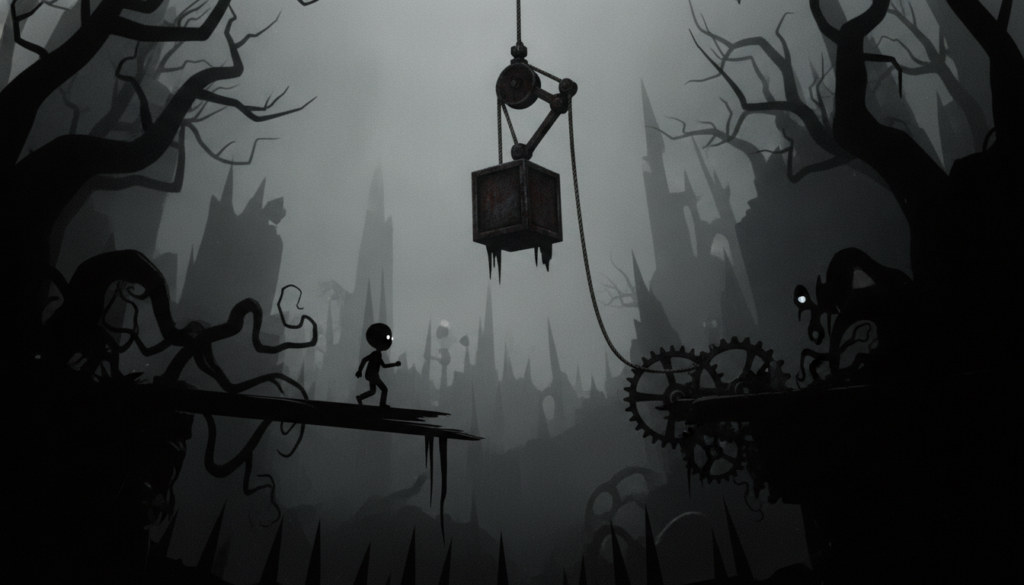
The journey offered by Playdead in Limbo transcends the standard concept of digital entertainment, providing a deeply immersive experience that every puzzle enthusiast should encounter at least once.
The precise blend of minimalist art, atmospheric sound design, and clever mechanics creates an unforgettable whole. Every element works in harmony to transform a simple screen into a living, breathing world.
So, dive into this dark universe now to discover the magic hidden within every shadow. A challenge awaits players willing to unravel the mysteries of a landscape that defies both logic and perception.